A Practitioner Guide from Siobhán Shinnors Herbal Clinic
In my herbal practice at Siobhan Shinnors Better Health Clinic, I recognise the many faces of histamine overload and instead of simply “blocking.”
I work with clients to alleviate symptoms of :
The clinical goal is to reduce histamine load, stabilise mast cell activity, and restore immune regulation — not suppress normal immune function.
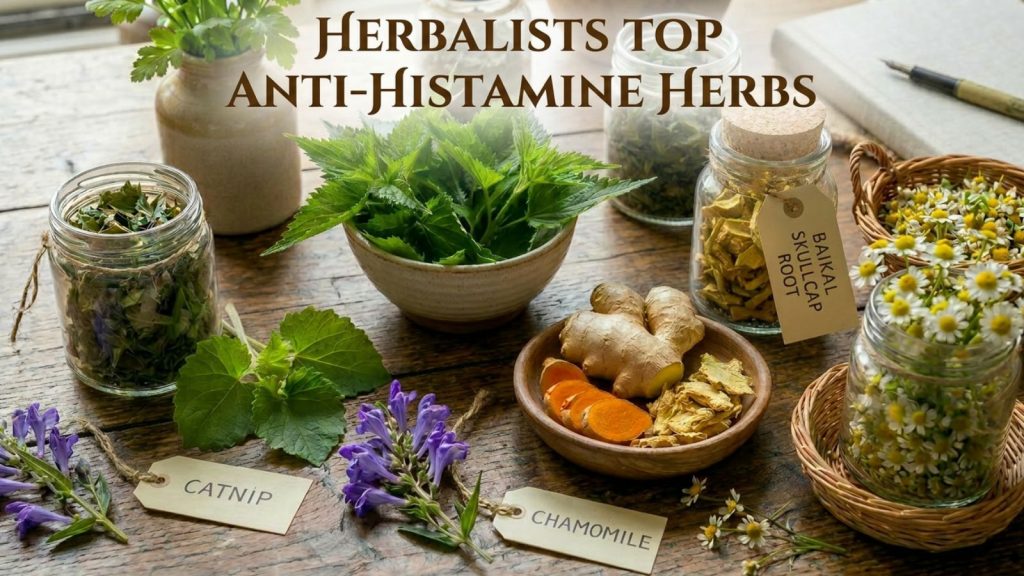
My Top Herbal Anti-histamines Guide
These are the herbs I use most frequently in practice for histamine modulation, listed in order of clinical preference and observed effectiveness.
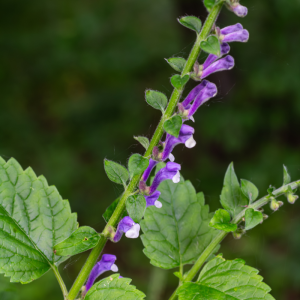
Baical Skullcap (Scutellaria baicalensis)
Baical skullcap is my primary herb for histamine and mast cell regulation. In clinical practice, it is one of the most reliable herbs for:
It is particularly useful in long-standing or systemic histamine issues, where symptoms are persistent and multi-layered.
Japanese Knotweed (Fallopia japonica)
Japanese knotweed is a key herb for immune modulation and inflammatory control.It contains resveratrol-rich compounds that support:
In practice, I often use it where histamine symptoms overlap with fatigue, inflammation, or chronic immune activation. It is a superb multi talented herb, with vasodilating and antioxidant properties making it very useful where airways or blood vessels are constricted.
Coleus forskohlii (Coleus forskohlii)
Coleus is a more specialised herb that I use selectively in clinical practice. It is gaining increasing interest in research settings for its significant benefit for MCAS (mast cell reaction) related conditions. Its active compound, forskolin, works through cAMP pathways, influencing immune and mast cell behaviour. Clinical actions include:
Coleus is especially powerful where there is multisystem involvement . Also where hypothyroidism or metabolic sluggishness is part of the symptom picture and it increases the body’s metabolism, by increasing the breakdown of stored fat for energy
Chamomile (Matricaria chamomilla)
Chamomile is one of the most valuable dual-action herbs — working on both the nervous system and histamine response. It is particularly helpful when symptoms are worsened by stress. Clinical actions include:
The gentle chamomile can also boost serotonin levels which not only improves mood but calm gut spasms and discomfort. It is a very versatile herb and with its gentle antihistamine action, makes it a good compliment to most formulas.
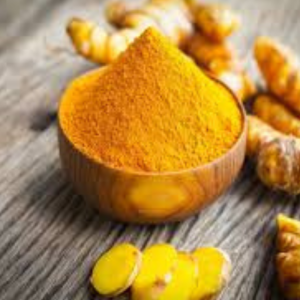
Turmeric (Curcuma longa)
Turmeric is a powerful anti-inflammatory and immune-modulating herb. It supports:
Turmeric is particularly good addition where there is inflammation present and in more severe mast cell reaction symptom pictures.
Peppermint (Mentha piperita)
Peppermint is a useful herb where histamine symptoms affect the respiratory and digestive systems. In practice, it supports:
It is particularly helpful for acute symptom relief patterns.
Final Thoughts
Herbal strategy changes significantly depending on which pattern is present. In practice, I rarely use single herbs for histamine management. Instead, I build structured combinations that target: Mast cell stability, Inflammatory load, Nervous system reactivity and Detoxification pathways (especially liver and gut). This layered approach is what makes herbal medicine effective in complex histamine presentations. The herbs above are a selection of those I find most clinically effective in supporting: Stabilisation, Regulation and Long-term resilience. Other herbs not highlighted above are Nettle, Gingko, Chrysanthemum and Sarsaparilla.
At Siobhan Shinnors Herbal Clinic, treatment is always individualised — because histamine patterns are never identical from one person to the next.
________________________________________________________________________________
FURTHER READING
Baical Skullcap (Scutellaria baicalensis) – Mast Cell & Histamine Regulation
Key studies:
https://pmc.ncbi.nlm.nih.gov/articles/PMC5707656/
https://www.mdpi.com/2072-6643/9/11/1184
https://pubmed.ncbi.nlm.nih.gov/28713616/
Japanese Knotweed (Fallopia japonica)
Supporting literature:
https://www.sciencedirect.com/science/article/pii/S2667142523001124
Coleus Forskohlii
https://pmc.ncbi.nlm.nih.gov/articles/PMC4663611
Please subscribe to the website if looking for more articles like this.

Siobhán Shinnors
Licenced Medical Herbalist Nutritionist & Yoga Therapy
Herbalist, Nutritionist, Iridologist and Yoga Therapy
Herbalist, Nutritionist, Iridologist and Yoga Therapy